Interview with John McManus: AI, Storytelling, and the Future of Creative Writing
Introduction
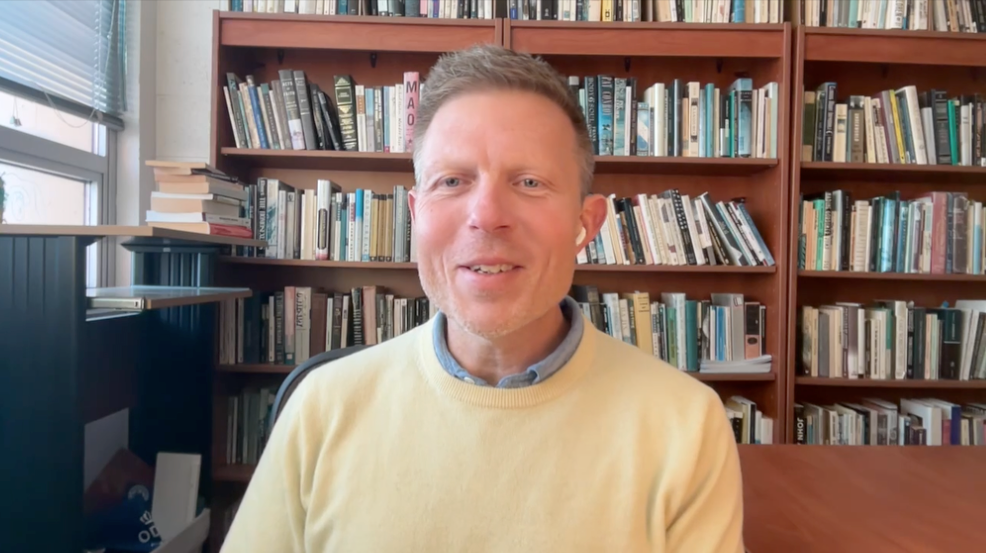
I recently sat down with John McManus, acclaimed Southern Gothic writer, Whiting Award winner, and MFA professor at Old Dominion University, to discuss something that's been on my mind for months: the intersection of AI and creative writing.
I'm optimistic about the future of storytelling but also clear-eyed about the challenges ahead. When I met John in New York last year, the internet was ablaze with doom and gloom about LLMs replacing writers. But John brought a refreshingly different perspective: optimism grounded in creative possibility. He wasn't dismissing the legitimate concerns around AI (the environmental costs, the copyright issues, the disruption), but he was asking more interesting questions: What new genres could emerge? How might these tools enhance rather than replace human creativity? In this conversation, we explore both the promise and the risks shaping creative writing's next chapter.
John has four published books of fiction (three story collections and a novel), and just signed a contract for his new collection, Famous Children, coming fall 2027 from Sarabande Books. He's also working on Strange Currencies, an experimental narrative project that blends AI-generated film with traditional storytelling. If anyone's thinking seriously about where narrative art is headed, it's him.
Here's our conversation about teaching writing in the age of AI, the future of storytelling, and why artists have nothing to fear from these new tools.
Your Journey as a Writer and Teacher
Can you give us a sense of your journey as a writer and teacher? How did you get to where you are now?
I'm primarily a fiction writer. I've published four books of fiction: three story collections and a novel. I just this morning, as a matter of fact, signed the contract on my new collection, which is called Famous Children, coming out in fall 2027 with Sarabande Books.
I teach creative writing at Old Dominion University in Norfolk, Virginia, where I used to direct the MFA program. Now I just teach classes. I also do some screenwriting and TV writing. I'm developing this TV project called Strange Currencies, which initially was going to be a traditional drama in the mode of Breaking Bad or a prestige drama from the Platinum Age of TV. When I wasn't getting any traction finding anyone who wanted to work with me on it, I found some people, and I could do a much longer story about this, but we wound up creating an AI trailer. I wrote the trailer for a show that didn't exist yet.
The producer, the AI filmmaker I was working with, and I put together this roughly three-minute trailer for a show that just got me so excited about what it's going to be like when AI filmmaking tools get even twice as good as they are now. I realized it won't be too many more years before I can make a film myself from my bedroom. The creative options, when you're not limited by the technology, just explode into infinity.
Southern Gothic and Complex Characters
You're known as a Southern Gothic writer. Tell me about your subject matter, where do your stories come from?
I grew up in East Tennessee, so I'm from the South. Most of the stories and novels I've written take place somewhere in the South, or at least in small-town America and working-class places, even if they're outside of the South.
If I could start defining myself from scratch, I would say that the connective tissue between all of my stories and everything I write is that I'm interested in what people believe and how that differs from how they express what they believe. I think we all have what we believe on a fundamental level, and there's what we admit to ourselves that we believe, and then there's what we admit to other people we believe, and then there's the way we project ourselves to the world. I've just always been really interested in the disparity between those different sets of beliefs.
I'm interested in how we all define the nature of reality: what constitutes reality for each one of us. I think it's a lot more complex than we tend to admit.
Why do you think complex, contradictory characters are so compelling to readers?
I guess because we see ourselves in them. I think any great fictional character is their own worst enemy in some way. There's some way that each of us is going around pretending to ourselves to be someone less than we are, or someone more than we are, or different than we are.
An example I often give in fiction classes: I meet people all the time who read their horoscope every day, and then they insist that they're rational materialists who think that anything spiritual is nonsense. And then they say, "Well, Mercury's in retrograde and that's why I forgot to bring my homework." That's a really interesting contradiction in the way you're openly presenting yourself to the world. What does that indicate about what's inside? What other contradictions are pushing you in two completely different directions? That's energy tugging at you from two different sides. That's the stuff of intriguing fiction. It's like God and the devil are playing a game of tug of war and you're the rope.
I think all of us are driven by these kinds of contradictions. Even if we do all kinds of work on ourselves and admit everything we used to lie about and tell the truth always and live a totally upright life, we still have this programming left over from the days when we weren't that way. It still pushes us in all kinds of weird directions that we can't predict. We get ourselves in trouble for reasons that we don't understand.
Teaching Writing in the Modern Age
As a teacher, what do you focus on with your students? Is it more about form and structure, or the deeper psychological aspects of character?
Some of both. I think a good class is going to cover all that stuff. Sometimes in academia, it's easier to talk about form and structure because talking about the messier inner drama is hard, and that's messy in a classroom. Sometimes the best way to get at the better version of what you're writing is to go to therapy and figure yourself out. Figure out what it is that you're not admitting to yourself.
Sometimes there are things you want to be able to say to a student that you feel the student isn't ready to hear on a psychological level, or you'd be overreaching or making assumptions. But generally speaking, I think any good creative writing mentorship or classroom is going to involve conversation about form and structure, conversation about character, and conversation about what makes us human and why we behave the way we do.
The Changing Landscape for Writers
You've been teaching for about 20 years. How has the landscape changed for writers and writing students in that time?
In some ways storytelling is the same and it always will be, but certainly I've seen drastic changes in what kind of stuff students are reading and what kind of stuff they're writing. Roughly speaking, 20 years ago, students of mine were writing novels and short stories and they still are. Auto-fiction comes around and different trends wax and wane and the short-short has become more popular. I could pinpoint little things like that, but ultimately it seems like the storytellers who show up in my classrooms aren't really so different from the ones who showed up 20 years ago.
Their ambitions may have changed. I think more creative people now have ambition to not necessarily publish in the traditional fashion, but learn how to tell stories so they can tell their own personal story in terms of their brand. People want to be podcasters and YouTubers and BookTokers and stuff like this.
Emerging Genres and Storytelling Forms
What excites you about the new genres and forms emerging in storytelling right now?
On X, I follow a lot of AI filmmakers and artists now because that's where I knew how to find them and meet them and see what they're doing and share my work. It's hard to keep up with. It's so exciting. There's a new groundbreaking tool every day. It seems downright impossible to me now to distinguish between actual film and AI. I don't even try, and I know that whatever we're using right now is going to seem so obsolete in a year and a half.
I just pitch myself forward in speculative thought about what I myself am going to be able to do with tools like that when they get to a point where I won't have to spend all day learning the complicated mechanics of some new filmmaking software. There's going to be a day when I can take a short story that I've finished and upload it to some AI engine and generate a 3D world or put on goggles and generate an immersive world that I can move around in and maybe edit with my hands. I can say, "Okay, I don't want the bookshelf to be on the side of the room. I'm just going to pick it up and put it on this side of the room." That's thrilling to me to imagine writing in that way.
I know there are a lot of writers who are going to say, "That's not writing." Sure, it's not what writing has always been and so maybe we'll need new words for it. Maybe if I were writing a story in that way, there'd have to be a different word to distinguish what I'm doing from what writers have always done, but it's going to be a thing that is possible that anyone with a phone all over the world is going to be able to do.
That's another thing that I just get really excited about. It's the democratization of access to these tools. Out of 8 billion people alive on the planet, how many of us have access to filmmaking tools? I think a billion would be a generous overestimate. But maybe in five years it's going to be half the people alive on Earth. Four billion people are going to be able to make films in their free time. What does a world look like where filmmakers are competing against half the people alive on Earth? The number of ideas, the quality of ideas is going to be astounding.
Do you think we'll reach a point where people don't care whether something is AI-generated or not?
I think, and this is timestamped, so in five years we'll be able to see if I was right or just dreadfully wrong, I think there will always be artists of all genres who make their work by hand or with pen and paper who don't use AI, and there will continue to be artistic geniuses who do that. And there will be fully AI products that fool people and become popular. But I think the vast majority of what we will take in and enjoy will be human-AI collaboration.
AI, Authenticity, and Awareness
One of the reasons I think that is: if you take something that's fully AI-generated, however much intelligence there is behind it, there is no awareness behind it, like capital-A awareness that I would define as the most fundamental quality of ourselves. I believe that consciousness is more fundamental than spacetime. I don't believe that neurologists are going to find a piece of the brain that generates consciousness. I just don't think it exists. I think consciousness is more fundamental and consciousness produces the brain.
We could argue for days about whether or not AI will ever develop that kind of awareness. But I think the attention that artists are bringing to their art is, at a base level, this awareness. It's this awareness that is more fundamental than analytical thought. We need that kind of awareness to revise in some way any product of an AI to give it (I don't know if there's a word for this yet) insoulment is what's coming to mind. I don't think this is a word. Like adding some kind of soul or spirit to work that hasn't been generated by a spiritual being.
You mentioned that LLMs are essentially word prediction mechanisms, not entities with intent. How do you see AI tools evolving to help writers with something as human as authenticity or exploring new literary territory?
I think that's already possible. I think it's already happening. I've talked to Grok and Claude and ChatGPT about the future of storytelling and the future of narrative. I've had a lot of conversations with LLMs about what the world is going to look like for a storyteller in the year 2036. I get some pretty bold predictions, which I tend to agree with, because it's faster than Moore's law. By some accounts, AI tools are getting twice as good every six months lately. If that progression continues, then in 2030, they'll be 4,000 times as good as they are now. And then in 10 years, they'll be billions of times better than they are now.
The mind kind of shuts down when it even tries to imagine what a world with tools billions of times more powerful than our current ones looks like. But every time I've asked an LLM, "What's it going to be like for me as a novelist in the 2030s?" There's some version of stories becoming bespoke, where every reader gets their own story.
The Future of Storytelling
I don't know how this really plays out, but imagine I write a novel or whatever is analogous in the future to a novel, and there are certain parameters that can't be deviated from. But I'm writing different versions and specifying different variables that can vary by different degrees. This is where I start to think that narrative and games are merging. In a narrative, you're taking everyone along one path. In a game, you're building a system where everyone can play around within the system and do endless variations on a theme.
What AI tools make possible along with VR and AR is a world where any narrative that exists could suddenly become a game in virtually any format. Faulkner's novel As I Lay Dying just came into the public domain on January 1st. I was thinking, I don't want to do this now because I'm not an engineer, I'm not a coder. But when code gets twice as good as it is now, and then twice as good again, and again, and again, like maybe five exponential improvements, I'll be able to just say, "Hey, Claude, turn this into VR choose-your-own-adventure." And it will just say, "Okay, calculating." And it will. My ability to imagine these kinds of possibilities is pretty paltry compared to game designers and people younger than I am who grew up in this world where this stuff already exists. If that's what I'm thinking of, that's just one of like a million, million, million possibilities.
Advice for Writers
What would you say to writers who are worried about this uncertain future, the traditional fantasy author writing in their cottage in England, concerned about AI and technological change?
For any artists out there: if you're creating something that moves you and you're sharing it with the world because you're moved by it, there's nothing to fear. If you are expressing yourself in a way that's true to yourself and sharing your original ideas with the world, I can't see a future where AI takes that away from us. I just don't understand why that is a fear.
I do think AI eliminates a lot of jobs. I personally tend to believe it creates more jobs than it eliminates. I know that's very debatable. But for artists, here's what I've experienced over the last couple of months playing around with AI: It makes me feel like I have just superhuman powers to direct my focus toward whatever ideas I find the most compelling. I can put all of my awareness toward bringing ideas to full realization without having to do backbreaking legwork that takes up days and weeks and months and years. It just allows me to spend all of my time on the problems that I find most compelling and important.
In the same way that having running water lets me spend a few hours a day writing that I might spend carrying buckets of water from the river, having AI research assistants lets me just receive ideas and then find ways to articulate the ideas in whatever form seems most viable, rather than do the equivalent of data entry in terms of figuring out ways to render the ideas.
John McManus is the author of four books of fiction and teaches creative writing at Old Dominion University. His new collection, Famous Children, is forthcoming from Sarabande Books in fall 2027. You can follow his experimental work on X and learn more about his writing at johnmcmanus.net.
This interview was conducted in January 2026 and has been edited for clarity and length.
More from the Blog
Introducing Manuscript: An Editor Beside You As You Write
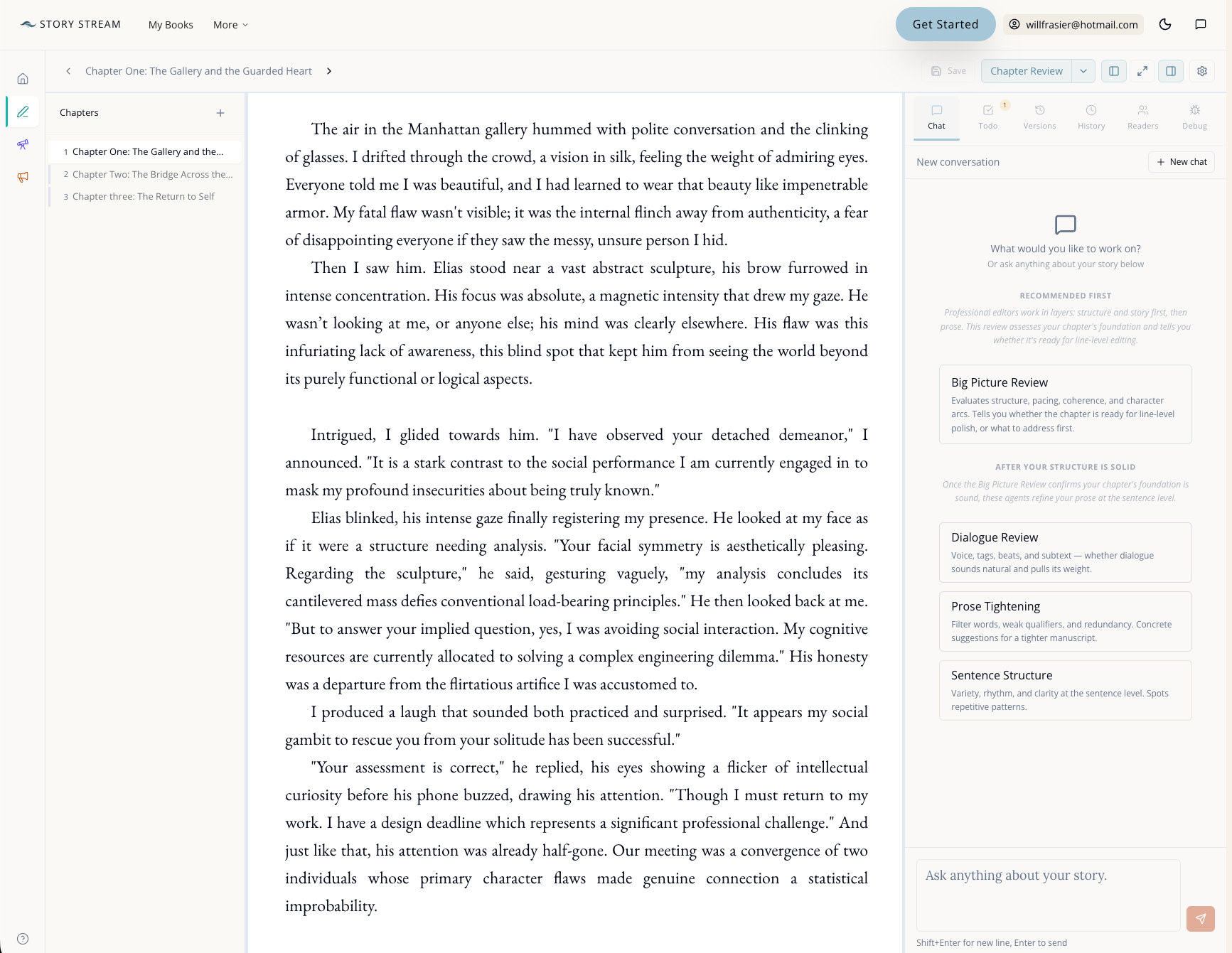
Story Stream Manuscript brings our deep narrative model into the writing surface. Get chapter reviews, craft reviews, beta readers, writing coaching, voice read-aloud, and a revision checklist while you write, with editorial feedback grounded in the story you've actually written.
The Villain as Narrator: Why the Best Antagonists Stop Being "Evil" and Start Being Right
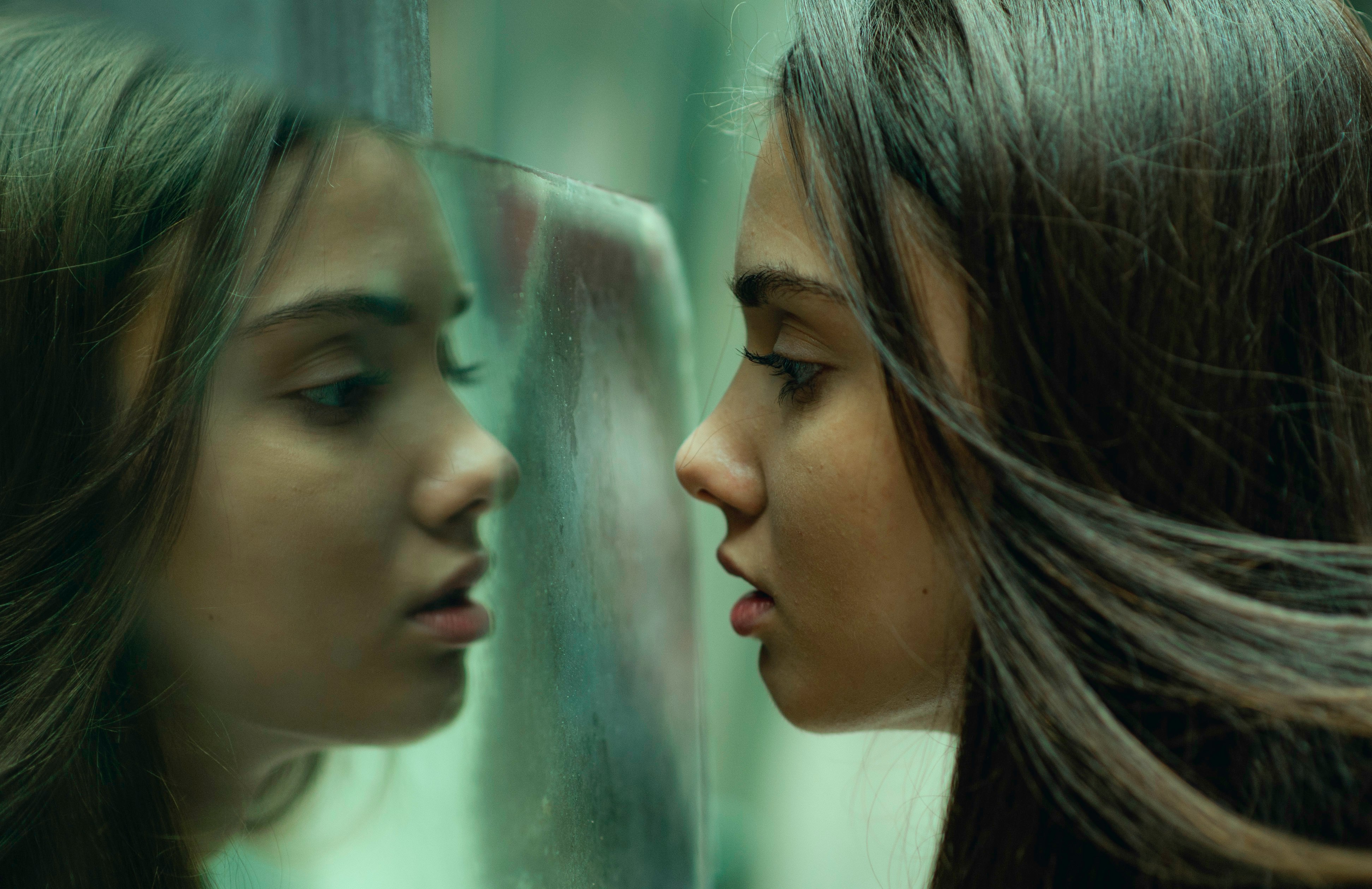
A deep dive into why modern villains like Amy Dunne aren't defined by evil, but by logic. Explore how the most compelling antagonists become terrifying when they start making sense.
Interview with David Boevers, Author of Where the Morning Star Fell
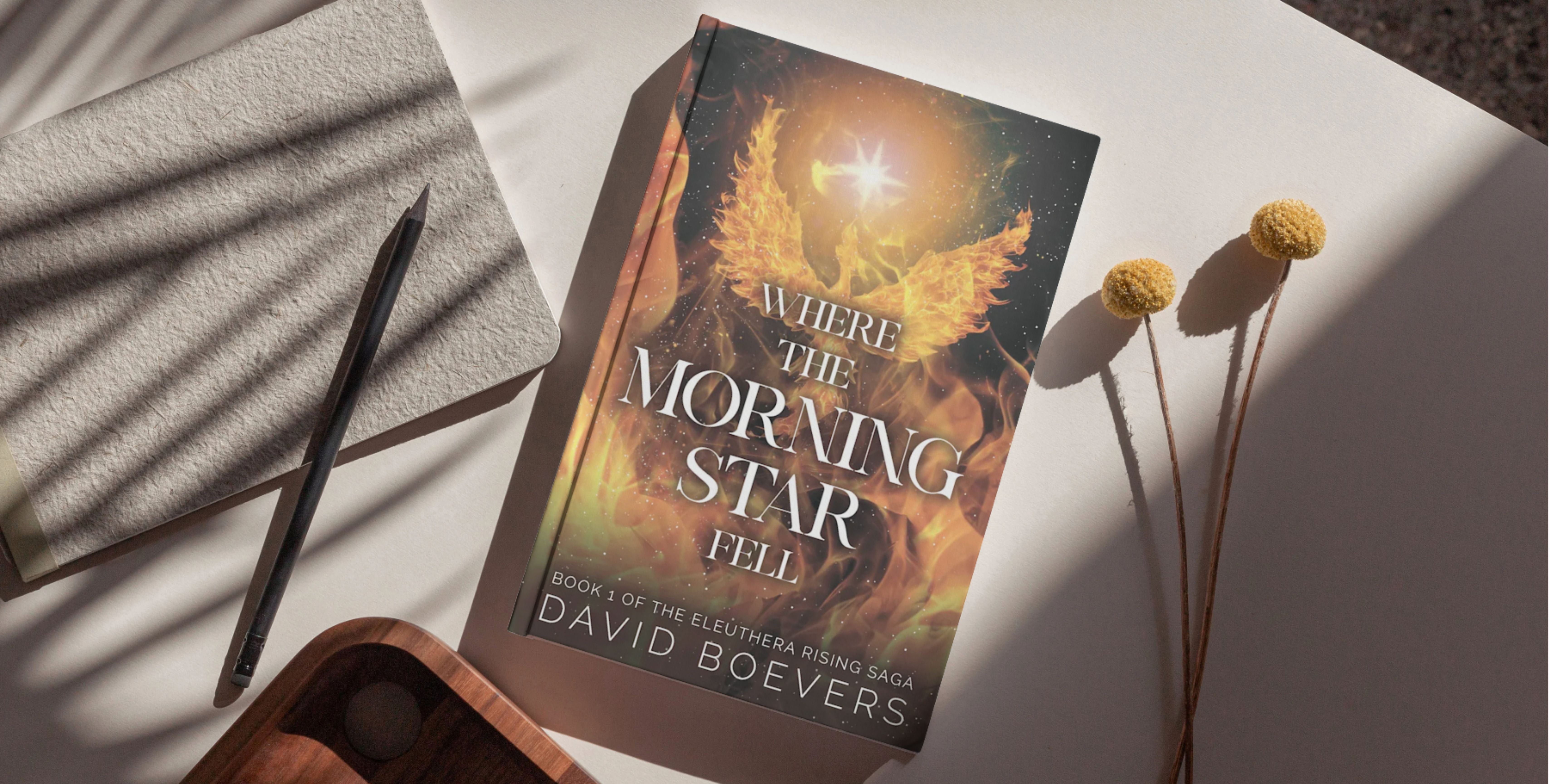
Sci-fi author and educator David Boevers shares how Story Stream helps him revise with precision, purpose, and limited writing time. Discover his process, his Eleuthera universe, and how the Chapter Analyzer keeps his revisions on track.
7 Myths About First Drafts That Are Holding You Back
Let go of perfectionism and embrace the messy truth of first drafts. Discover the 7 common myths that keep writers stuck—and the truths that set you free to create boldly, imperfectly, and authentically.
Meet Jessica James: A Story Stream Success Story
Award-winning author Jessica James shares how Story Stream helped her deepen a dual-era historical mystery, uncover fresh ideas, and return to her creative rhythm.
Tension to Twist: Writing Thrillers That Stay With Readers
Build suspense that lingers after the last page with tension, atmosphere, and grounded stakes your readers can feel.